


At a rally in Iowa on Sunday, the eve of the midterms, the president offered his military credentials. “I could have won the Vietnam War in a week, you know,” he said. “They dropped whatever the hell that red c**p is that they…kept dropping it in the forest.”
The audience yelled out “Agent Orange,” to remind Trump of the name of the herbicide the U.S. military used to strip Vietnamese forests.
“Agent Orange,” Trump said, “even though it’s red.” “Agent Orange, they drop it in the forest for years and years and years, instead of going after Ho Chi Minh City and the different places,” he continued. “I would have won that war in one week.”
As the old saying goes: Those who cannot remember the past are condemned to repeat it, but please don’t study the past at all if it’s going to make you bomb your ally.
“Ho Chi Minh City,” which President Trump sees as the key to American victory in Vietnam, didn’t exist during the war. It was Saigon, renamed after the North took it in 1975. Saigon was the capital of South Vietnam, America’s ally.
By the president’s logic, to defeat Iran, bomb Tel Aviv.
He probably meant Hanoi, but if you’re going to boast about your special understanding of the world that makes you unique in human history, you’ve got to get the city right.
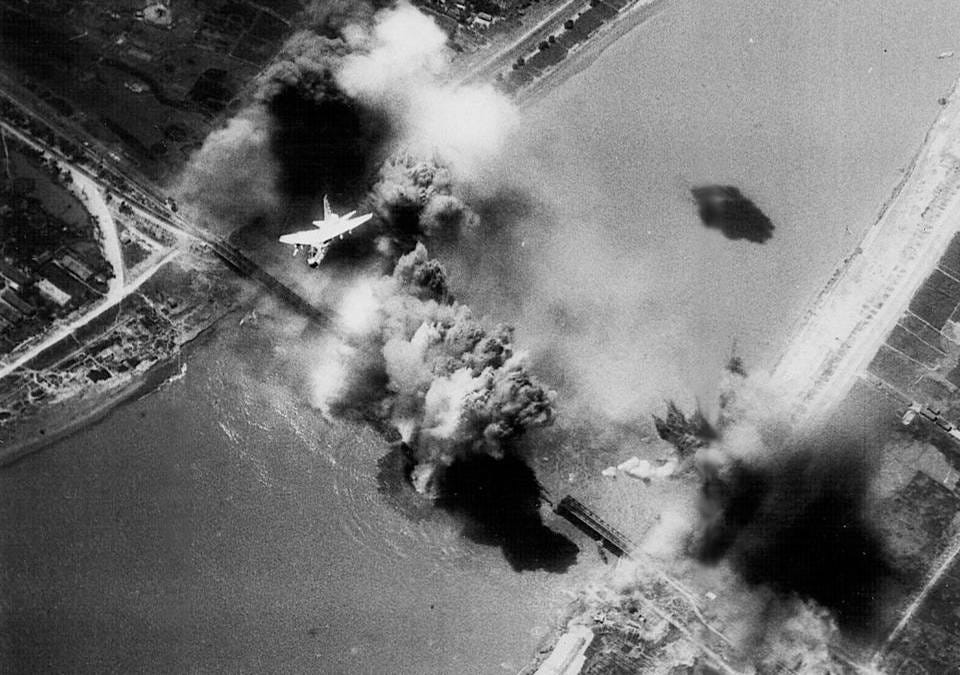
But the city isn’t the problem. Anyone can pick the wrong dot on the globe. The problem is a president disconnected from the planet.
The president has made the Vietnam boast before. In April he told CNBC he “would have won Vietnam, very quickly.” The president makes the boast to smother his problems in Iran. The quick war he expected is now in its ninth month. Sixty-five percent of Americans disapprove of his handling of the Iran war, according to Pew. Nearly two-thirds of Americans say the war hasn’t been worth fighting.
I couldn’t finish my ten-mile run today, but I’d have won yesterday’s New York Marathon in record time.
President Trump repeatedly promised he’d end the war in Ukraine in 24 hours. Russia’s full-scale invasion is nearing its fifth anniversary.
One way to think about the presidency: a job where wise decisions about national security keep Americans from being killed.
Twice president Trump has misunderstood the nature of the engagement. To distract from this, he claims he could have won other people’s wars, but those claims rest on the same flaw that befuddled him in Ukraine and Iran: that wars can be ended or won easily.
So, like Wile E. Coyote, the president answers the evidence of his failure with a fantasy of success. And the fantasy runs on the same belief that produced the failure.
The failure to read reality infected the original decision to go to war. Was bombing the only way to achieve what has been achieved so far, at this cost? It will infect the decisions to come. The president is weighing a new round of strikes after Tuesday’s elections, The Atlantic reported Sunday. At the same Iowa rally where he won Vietnam in a week, he said of Iran, “At some point we’re going to have to give them the hammer.”
General James Mattis, who would become this president’s first secretary of defense, used to quote William Tecumseh Sherman to me: “Every attempt to make war easy and safe will result in humiliation and disaster.” Mattis put it in his own terms: “It is not scientifically possible to accurately predict the outcome of an action. To suggest otherwise runs contrary to historical experience and the nature of war.”
Ulysses S. Grant learned it the hard way. He wrote in his memoirs, “Up to the battle of Shiloh I, as well as thousands of other citizens, believed that the rebellion against the Government would collapse suddenly and soon, if a decisive victory could be gained over any of its armies.” After Shiloh, he gave up that idea. The war lasted three more years.
That President Trump has chosen Vietnam as the setting of his fantasy has a certain poignance. The United States didn’t lack for might in Vietnam. It dropped more bomb tonnage on Indochina than all sides dropped in World War II, plus more than 19 million gallons of the herbicide he can’t name. What it lacked was an enemy willing to lose on a quick schedule.
This is still true.
Some will say this is just hyperbole, that the president talks big and knows better. That requires believing that behind the boast sits a clear-eyed view of what wars cost and how they end. There is no evidence of this. There is evidence of the opposite: Ukraine in 24 hours, Iran in four to six weeks, and then, by one count, a dozen promises in the war’s first month that the end was near. On Friday he said it again: the war ‘is going to be over very soon.’
To imagine a sober strategist behind the bluster, you have to believe in something you can’t see, against all the evidence you can. It’s like believing you could have won Vietnam in a week.
And consider along with the outrageous personal attacks he makes on reporters who ask questions about the war in Iran. The extreme defensiveness and the ridiculous fantasies are hard to listen to.
There is not a shot in hell that donny could find Vietnam on a map.